

Losing someone you love is one of the hardest things a person can go through. Sometimes the right words feel impossible to find. That’s where the phrase may his memory be a blessing comes in — a short, powerful sentence rooted in Jewish tradition that has quietly become one of the most comforting things you can say to someone who is grieving.
If you’ve ever heard may her memory be a blessing at a funeral, read it in a card, or seen it under a photo on social media, you may have wondered what it actually means and where it comes from.
This guide explains the meaning, the Hebrew origin, and gives you dozens of ready-to-use messages for every situation — whether you’re writing a card, texting a friend, or posting a tribute online.
What Does “May His Memory Be a Blessing” Actually Mean?
The phrase may his memory be a blessing is a Jewish expression of comfort used after someone dies. Instead of only saying “I’m sorry for your loss,” it shifts the focus toward something positive: the idea that remembering this person should bring warmth, not just pain.
In Hebrew, this comes from the phrase zichrono livracha (for a man) or zichrona livracha (for a woman), often shortened to the letters ז״ל (zal). It roughly translates to “of blessed memory.” So when someone says may her memory be a blessing in Hebrew, they’re really invoking this centuries-old blessing, wishing that every memory of the person continues to do good in the world.
There’s also a related phrase you’ll often hear right after someone passes away: Baruch Dayan HaEmet, meaning “Blessed is the True Judge.” This is said immediately upon hearing news of a death, while may his memory be a blessing (or may her memory be a blessing) is used afterward, especially during shiva, at funerals, or in written tributes.
Today, the phrase has grown far beyond its Hebrew and Jewish roots. Many people of all backgrounds now use may their memory be a blessing as a general way to honor someone who passed, because it captures something universal: grief mixed with gratitude.
The Origin of “May His Memory Be a Blessing”
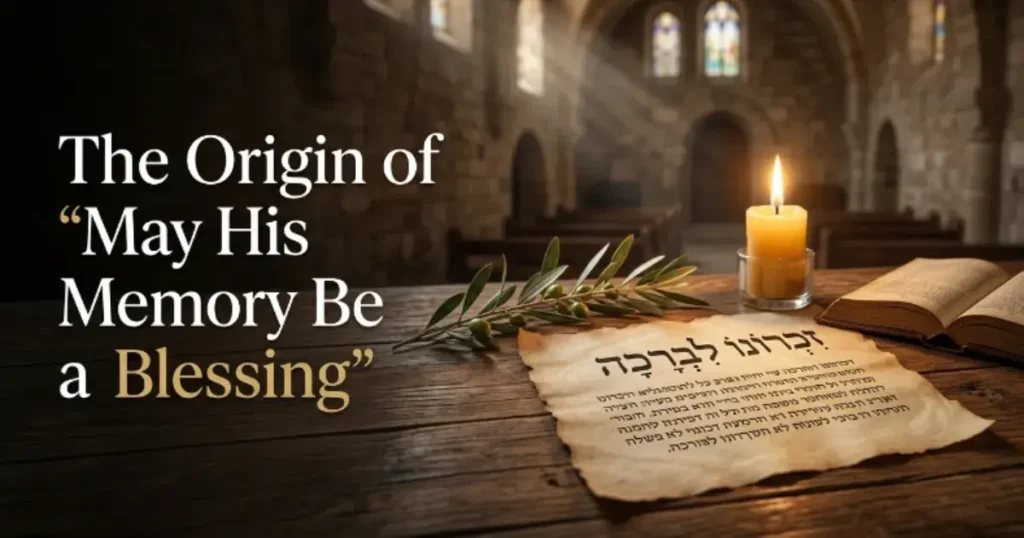
The may their memory be a blessing origin traces back to the Hebrew Bible, specifically Proverbs 10:7, which says “the memory of the righteous is a blessing.” Jewish tradition took this verse and turned it into a spoken blessing used whenever someone’s name is mentioned after their death.
Over centuries, it became standard practice in Jewish communities to add ז״ל or “of blessed memory in Hebrew” after a deceased person’s name, almost like a title of honor. It’s a way of saying: this person’s life mattered, and their memory still carries light.
Emotional Messages: May His Memory Be a Blessing
These deep, heartfelt lines are perfect for funerals, sympathy cards, or quiet moments of remembrance.
- “May his memory be a blessing, forever woven into the hearts of those he loved.”
- “Though he is gone, his kindness still lives in everyone he touched. May his memory be a blessing.”
- “May her memory be a blessing, lighting the path for all who carry her love forward.”
- “Her laughter, her warmth, her strength — may her memory be a blessing to us all.”
- “May their memory be a blessing, a comfort in every quiet moment of missing them.”
- “Even in sorrow, we find peace knowing his memory be a blessing to everyone he met.”
- “May his memory be for a blessing, a gentle reminder of the love he gave so freely.”
- “She may be gone, but her spirit remains. May her memory be for a blessing always.”
- “May your memory be a blessing to everyone whose life you touched so deeply.”
- “In every memory shared, may their memory be a blessing that never fades.”
- “May his memory be a blessing — not an ending, but a light that continues to shine.”
- “Her love outlives her. May her memory be a blessing in Hebrew and in every heart.”
- “We honor him today and always. May his memory be a blessing to his family and friends.”
- “May their memories be a blessing, woven gently into the fabric of our lives.”
- “Grief is love with nowhere to go. May his memory be a blessing until we meet again.”
- “May her memory be a blessing, carried softly in every story we tell of her.”
- “His kindness was quiet but powerful. May his memory be a blessing forever.”
Meaning: These lines express deep respect and comfort, honoring the person’s impact rather than dwelling only on loss. Usage: Best for sympathy cards, funeral programs, eulogies, or a heartfelt WhatsApp message to someone grieving.
Short & Simple Messages
Sometimes fewer words say more. These short lines work well when you don’t know what else to add.
- “May his memory be a blessing.”
- “May her memory be a blessing.”
- “May their memory be a blessing.”
- “May his memory be for a blessing, always.”
- “Baruch Dayan HaEmet. May her memory be a blessing.”
- “Rest easy. May his memory be a blessing.”
- “Forever in our hearts. May her memory be a blessing.”
- “May their memories be a blessing to all who knew them.”
- “Gone but never forgotten. May his memory be a blessing.”
- “With love, may her memory be for a blessing.”
- “May your memory be a blessing, today and always.”
- “So loved. So missed. May his memory be a blessing.”
- “A life well lived. May her memory be a blessing.”
- “May their memory be a blessing in Hebrew and in every language of love.”
- “Peace to your memory. May his memory be a blessing.”
- “Forever cherished. May her memory be for a blessing.”
Meaning: A brief, respectful way to acknowledge a loss without needing many words. Usage: Great for text messages, Instagram captions, or signing a condolence card quickly and sincerely.
Comforting Words for Friends, Family & Loved Ones

These messages are written to feel personal, as if speaking directly to someone who is grieving.
- “I know no words can fill this loss, but may his memory be a blessing to you every single day.”
- “Thinking of you and your family. May her memory be a blessing that brings you comfort.”
- “Your dad gave so much love to everyone around him. May his memory be a blessing forever.”
- “Your mom’s warmth touched everyone who knew her. May her memory be a blessing to your whole family.”
- “I’m here for you, always. May their memory be a blessing as you heal, one day at a time.”
- “He was one of a kind. May his memory be a blessing to everyone lucky enough to know him.”
- “Sending you strength and love. May her memory be for a blessing during this difficult time.”
- “Your friendship with them was so special. May their memory be a blessing you carry with you.”
- “I’ll always remember how kind he was to me. May his memory be a blessing to us both.”
- “She left such a mark on this world. May her memory be a blessing in Hebrew tradition and beyond.”
- “Your grandmother’s stories will live on. May her memory be a blessing forever in your family.”
- “May his memory be a blessing, and may you find peace in the love he left behind.”
- “Your brother’s spirit will always be part of you. May his memory be a blessing today and always.”
- “Sending hugs from afar. May her memory be a blessing that softens your grief.”
- “May their memory be a blessing, and may your family find comfort in each other.”
Meaning: These messages personalize comfort by connecting the phrase directly to someone’s specific loss. Usage: Ideal for condolence texts, sympathy calls, or private messages to a grieving friend or family member.
Messages for Social Media Tributes & Memorial Posts
Perfect for Instagram, Facebook, or online memorial pages.
- “One year later, and still — may his memory be a blessing. 💙”
- “Missing you more than words can say. May her memory be a blessing. 🕊️”
- “In loving memory. May their memory be a blessing to everyone who knew them.”
- “Today we remember a beautiful soul. May his memory be a blessing forever. 🌿”
- “Forever in our hearts, forever in our stories. May her memory be a blessing.”
- “Ten years since we lost you, and your light still shines. May his memory be a blessing.”
- “Posting this in honor of the best mom anyone could ask for. May her memory be a blessing.”
- “May their memories be a blessing — sharing this to keep his story alive.”
- “Some people never really leave us. May his memory be a blessing always.”
- “A tribute to a life full of love. May her memory be for a blessing.”
- “Grateful for every memory we made. May their memory be a blessing in Hebrew and in heart.”
- “Still talking about you like you’re here, because you are. May his memory be a blessing.”
- “Sharing this photo because her smile deserves to be remembered. May her memory be a blessing.”
- “May your memory be a blessing — this post is for you, always.”
- “Honoring a legend today. May his memory be a blessing to everyone who ever met him.”
Meaning: These posts blend public remembrance with the traditional blessing, keeping the tribute warm and shareable. Usage: Best for Instagram captions, Facebook memorial groups, or anniversary tribute posts.
How to Write Your Own “May His Memory Be a Blessing” Message
Writing something personal doesn’t have to be complicated. Follow this simple approach:
- Start with a real memory. Mention a quality, moment, or story that reminds you of them.
- Say what they meant to you. A short, honest sentence is more powerful than a long paragraph.
- Add the blessing. End with “may his memory be a blessing,” “may her memory be a blessing,” or “may their memory be a blessing” depending on who you’re honoring.
- Keep the tone gentle. This isn’t the place for jokes or forced positivity — simple and sincere works best.
Example: “She always had a story to make us laugh, even on hard days. Her kindness shaped everyone around her. May her memory be a blessing forever.”
Tips to Make Your Message More Personal
- Use the person’s name instead of “he” or “she” when possible.
- Mention a specific memory, habit, or phrase they were known for.
- Match the tone to where you’re sharing it — more formal for a card, warmer and more casual for social media.
- If writing in Hebrew, double-check whether the person was male or female, since the phrase changes slightly (zichrono livracha vs zichrona livracha).
- It’s okay to keep it short. A few honest words often mean more than a long message.
Frequently Asked Questions
What does “may his memory be a blessing” mean?
It’s a Jewish expression of comfort used after someone dies, meaning that the memory of this person should bring goodness and warmth rather than only sadness.
What is “may his memory be a blessing” in Hebrew?
In Hebrew, it’s expressed as zichrono livracha for a man or zichrona livracha for a woman, often written as ז״ל after someone’s name.
What is the difference between “Baruch Dayan HaEmet” and “may his memory be a blessing”?
Baruch Dayan HaEmet (“Blessed is the True Judge”) is said right when someone hears news of a death. May his memory be a blessing is used afterward, during mourning and remembrance.
Can non-Jewish people say “may her memory be a blessing”?
Yes. While it comes from Jewish tradition, many people today use this phrase to comfort anyone who has lost a loved one, regardless of religion.
Is it correct to say “of blessed memory” instead?
Yes, “of blessed memory” is simply the English translation of the Hebrew phrase and can be used the same way, often placed right after a person’s name.
What do I say instead if I don’t know the person’s gender identity?
Use “may their memory be a blessing” — it works respectfully and grammatically for anyone.
Final Thoughts
Grief is heavy, but the words we choose can lighten it, even slightly. May his memory be a blessing isn’t just a phrase — it’s a promise that love outlives loss. Whether you’re writing a card, sending a text, or posting a quiet tribute online, these words remind us that the people we lose are never really gone.
They live on in memory, in stories, and in the blessing they leave behind.

Hi, I’m Julia Daniel, an SEO content writer passionate about creating heartfelt wishes, blessings, messages, and quotes for every occasion. My goal is to help readers find meaningful words that inspire, celebrate special moments, and strengthen relationships through genuine, easy-to-read content.